
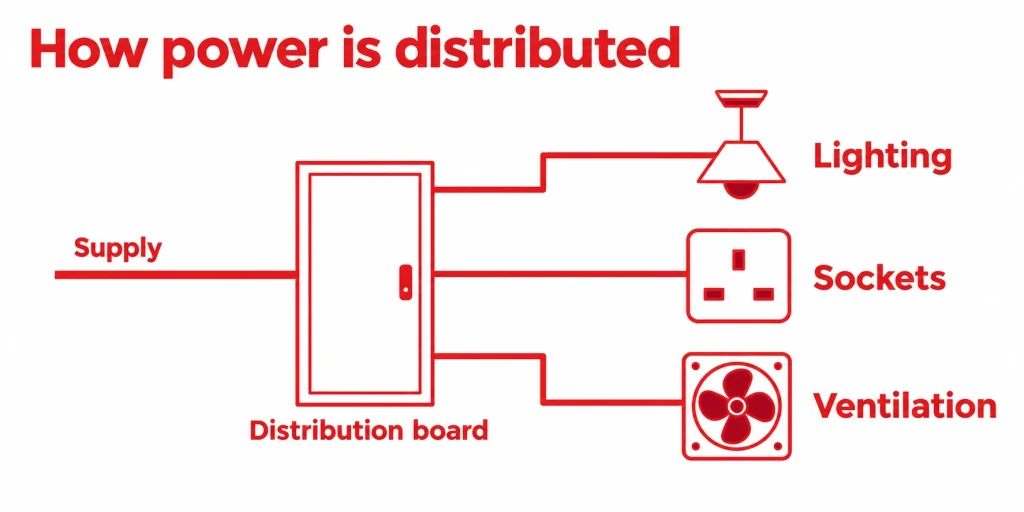
Planning new equipment, a change of use or an office refurbishment? Your distribution board is an important starting point. It helps determine how additional circuits can be supplied, how faults are contained and how electrical work can be organised around your business.
A board with empty spaces is not necessarily ready for extra demand, while an older board does not automatically need replacing. Understanding the difference helps you ask better questions, compare proposals and agree electrical work that meets both your current needs and future plans.
What a commercial distribution board actually does
A distribution board receives an electrical supply and divides it between individual circuits. Those circuits might serve lighting, sockets, ventilation, catering equipment or machinery. Protective devices within the board help disconnect circuits when certain faults occur, reducing risks to people and the installation.
Some premises have one main board. Others have several boards supplied from a main panel, serving different floors, departments or operational areas. That arrangement affects where new circuits can originate and which parts of the building need to be isolated during work.
For a business owner or facilities manager, the board matters because it influences:
- Whether additional equipment can be supplied safely.
- How easily circuits can be identified, tested and maintained.
- Which services may be interrupted when a circuit is isolated.
- How straightforward future alterations can be.
The board is only one part of the installation. Its suitability depends on the incoming supply, cables, connected equipment and protective arrangements working together. A useful assessment considers that whole chain rather than judging the enclosure alone.
Capacity means more than spare spaces
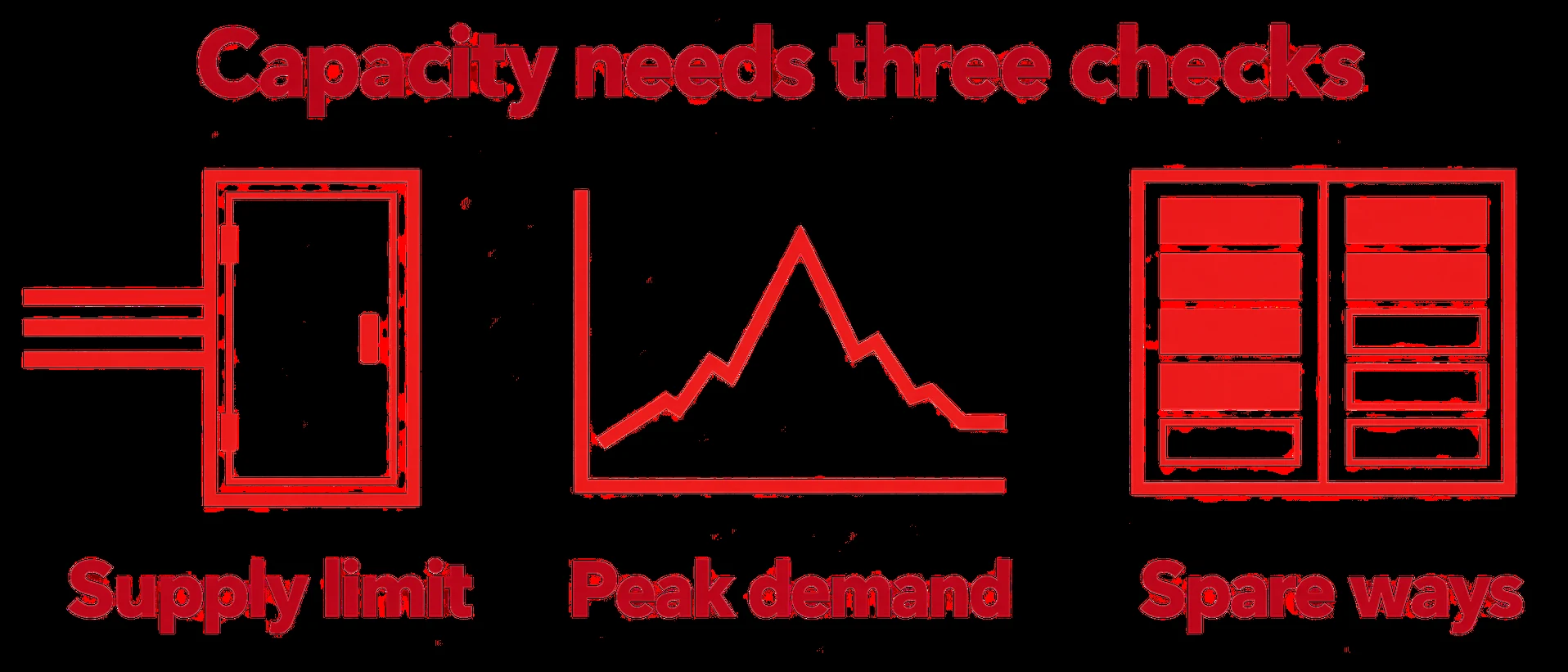
Empty circuit positions, often called spare ways, provide physical room for additional protective devices. They do not confirm that the board or incoming supply can support more electrical demand. These are separate checks.
Your contractor should consider the board rating, supply limits, existing demand and the capacity of the cables feeding it. They will also assess the proposed equipment, including starting currents where relevant. Adding together the ratings printed on circuit breakers does not establish the building’s actual demand.
Where demand varies throughout the working day, load monitoring may help establish a reliable picture. For premises with a three phase supply, the assessment should also consider how loads are distributed between phases. Spare capacity on one phase does not necessarily resolve a constraint on another.
Give your contractor equipment details and explain what will operate simultaneously. A kitchen expansion, for example, needs an assessment based on appliance loads and operating patterns, not simply the number of new sockets. Early electrical design planning can help establish whether existing capacity is sufficient or whether wider supply arrangements need attention.
Circuit organisation affects everyday reliability
A well organised board helps people understand what each circuit supplies. Accurate labels and circuit schedules support safe isolation, fault finding and maintenance. Vague descriptions such as ‘sockets’ become less useful when a building has several working areas or has undergone repeated alterations.
Circuit organisation also affects the extent of disruption when a fault occurs. Separating suitable groups of loads can help prevent one problem from interrupting unrelated activities. Protective devices must be selected and coordinated appropriately, rather than assuming that adding more breakers will improve reliability.
Before alterations are designed, explain which operations are particularly important to your business. These might include communications equipment, refrigeration or access systems. Fire alarms and emergency lighting have specific requirements that must also be considered when planning supplies and isolation.
Ask whether the proposed arrangement will make future testing and maintenance easier to manage. Clear identification, accessible equipment and sensible circuit grouping can be valuable even when no increase in overall capacity is needed. Labels should reflect verified circuit information, not assumptions based on previous use.
How contractors decide whether to retain or replace a board
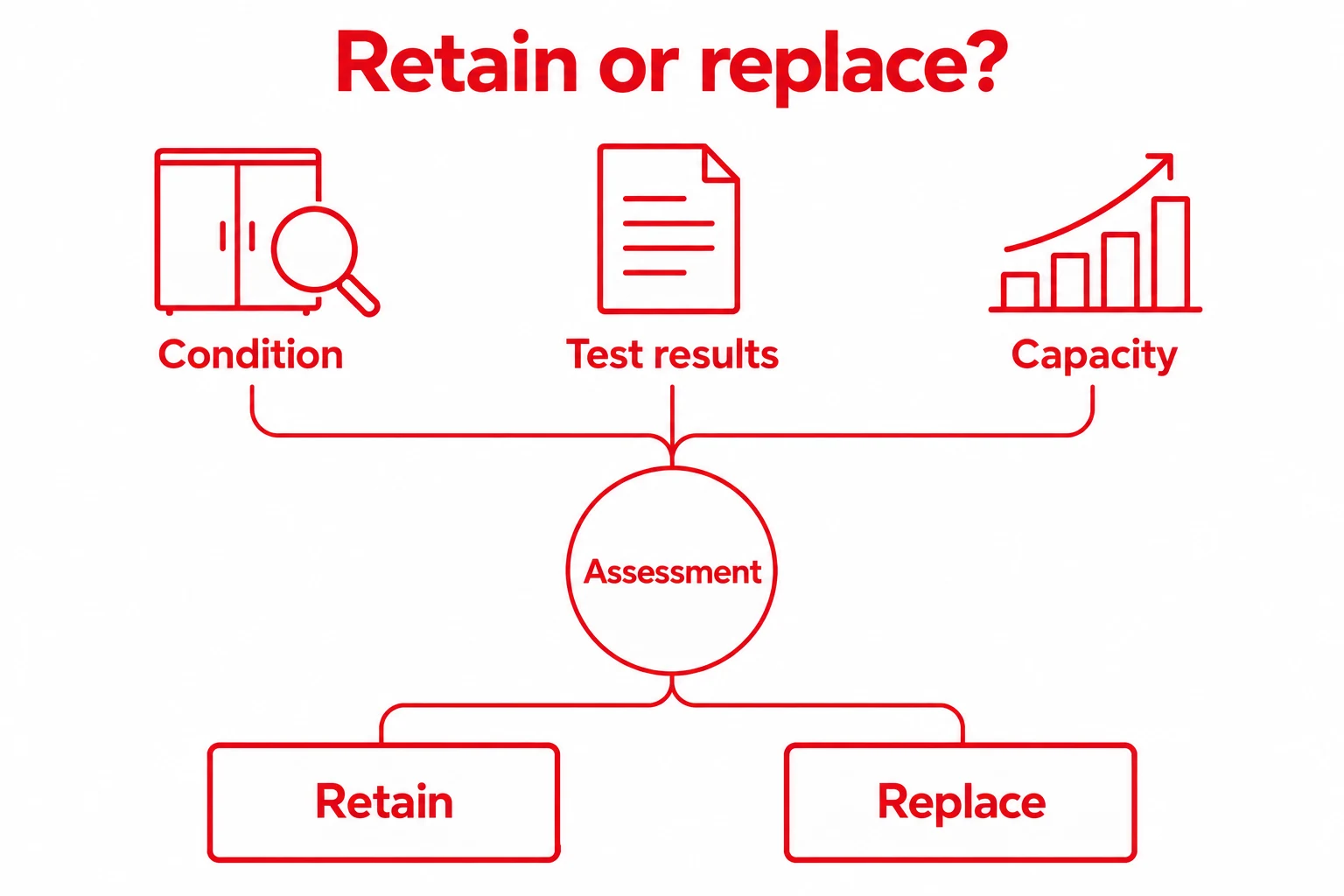
A distribution board does not need replacing simply because electrical alterations are planned. The decision should follow an assessment of its condition, suitability and ability to accommodate the proposed work safely.
Relevant checks include signs of overheating or damage, the condition of connections, available circuit positions and the suitability of protective devices. The contractor should also establish whether compatible components remain available. A device that physically fits is not necessarily approved for use in that board.
Existing inspection records can help, but they may not answer every question about a proposed addition. Appropriate electrical testing and commissioning provides evidence about the installation and verifies completed work. Any limitations in previous reports should be considered.
Depending on the findings, a proposal might retain the existing board, add a suitably supplied local board or replace equipment that cannot support the agreed requirements. Adding another board does not itself increase incoming supply capacity.
Ask for the reason behind each recommendation. A clear explanation should connect the proposed work to condition, protection, capacity or operational needs. Age alone is not a complete assessment, and board replacement does not automatically mean replacing all existing circuit wiring.
Planning future work and comparing proposals
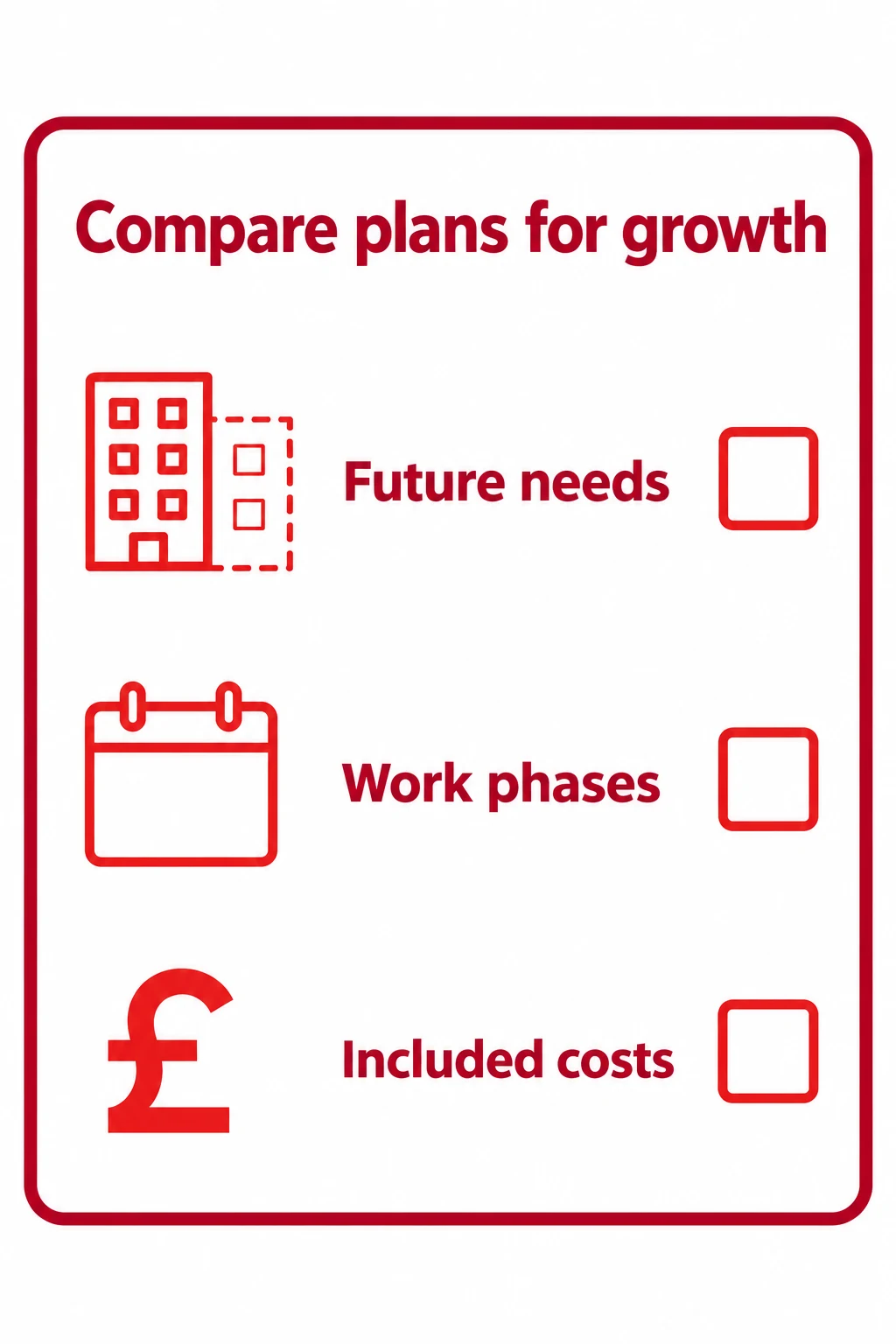
Share foreseeable changes before the scope is agreed. Additional machinery, altered room layouts or longer operating hours may change electrical requirements. You do not need a final specification for every future project, but likely developments are worth discussing.
Planning can include suitable spare circuit positions, accessible cable routes and space for additional distribution equipment. Any allowance should be realistic. Spare ways are useful, but they do not guarantee future electrical capacity.
When comparing proposals, ask each contractor to clarify:
- What existing supply and load information has been checked.
- Which circuits and areas are included in the work.
- What isolation is needed and how it will be coordinated.
- Whether supply alterations or third party approvals are required.
- What testing, certification and updated circuit schedules will be provided.
Also identify essential services and agree how they will be managed during planned interruptions. Distribution board work requires competent electrical professionals and appropriate safe isolation procedures.
Baudelaire’s electrical contracting services can help turn these requirements into a coordinated scope, with decisions based on the installation and the way your business uses it.
- Spare circuit positions do not prove that more electrical capacity is available.
- Clear circuit identification supports safer isolation, testing and maintenance.
- Board alterations should follow an assessment of condition, protection and demand.
- Share future equipment plans before agreeing the scope of electrical work.
Frequently asked questions
Can new equipment use an existing spare circuit position?
Possibly, but the position is only a starting point. A contractor must check supply capacity, board suitability, protective device compatibility and the requirements of the new circuit before confirming the arrangement.
Will replacing a distribution board give us more power?
Not by itself. A replacement may provide more circuit positions or suitable protection, but usable capacity remains limited by the incoming supply and associated equipment. Any increase must be assessed across the supply arrangement.
Will the whole building need to lose power during board work?
That depends on the installation and the work involved. Some tasks require a wider shutdown, while others may allow unaffected areas to remain supplied. Your contractor should explain the isolation plan and agree arrangements for essential services beforehand.
What information should we provide before an assessment?
Gather available electrical inspection reports, circuit schedules and details of proposed equipment. Explain operating hours, equipment used simultaneously and any services that must remain available. Missing records can be discussed when arranging the assessment.
Make informed plans for your electrical installation
If you are adding equipment or planning alterations, Baudelaire can help assess your distribution arrangements and explain suitable next steps. Talk to us about your existing installation and what your business needs next.