
Emergency lighting helps people find their way out when normal lighting fails. Its value depends on more than whether a fitting switches on. The lighting must support the escape route, remain available for the required duration and help people recognise exits and changes in level.
Regular testing gives building managers a practical way to identify faults before an emergency. It can reveal failed lamps, weakening batteries and other defects, while inspections help flag changes to the building that may leave escape routes without suitable coverage.
What emergency lighting needs to achieve
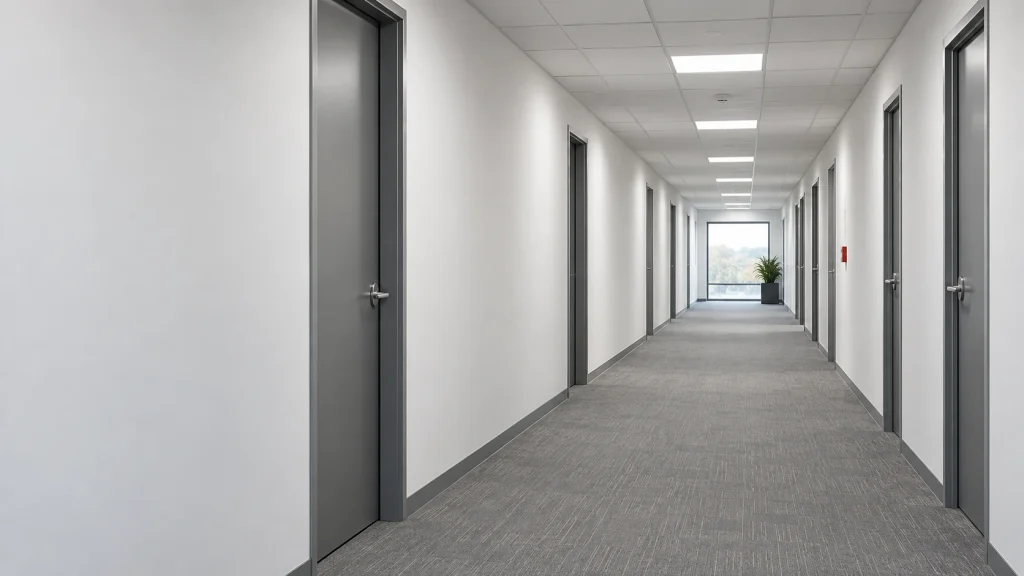
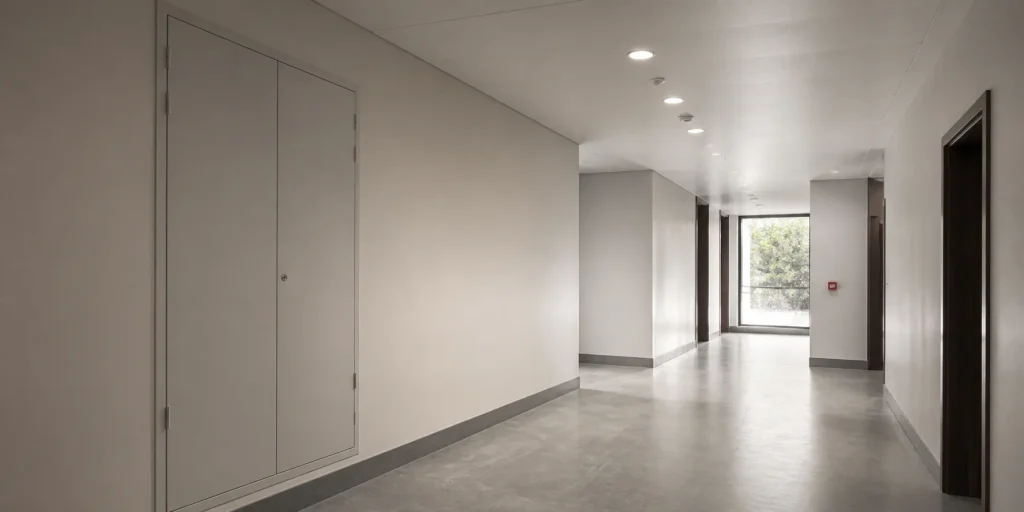
When the normal lighting supply fails, emergency escape lighting should help occupants move towards a place of safety. That includes people unfamiliar with the building, who may need clear direction at junctions, stairs and final exits.
Suitable provision depends on the layout, use and risks of the premises. Escape routes need attention, but so may open areas where people must orient themselves before reaching a route. Certain higher risk activities can require additional emergency lighting arrangements.
Important points to consider include:
- Stairs, ramps and other changes in floor level.
- Corridor intersections and changes of direction.
- Exit doors and the route immediately outside final exits.
- Fire alarm call points and firefighting equipment.
- Exit signs that need to remain visible when normal lighting fails.
A working fitting does not, by itself, prove that an area has sufficient illumination. Its position, light output and relationship to nearby fittings also matter. A new partition, altered doorway or storage arrangement can affect coverage even when every fitting still operates.
This is why testing should sit alongside regular reviews of escape routes and the building’s fire risk assessment.
What professional emergency lighting testing checks
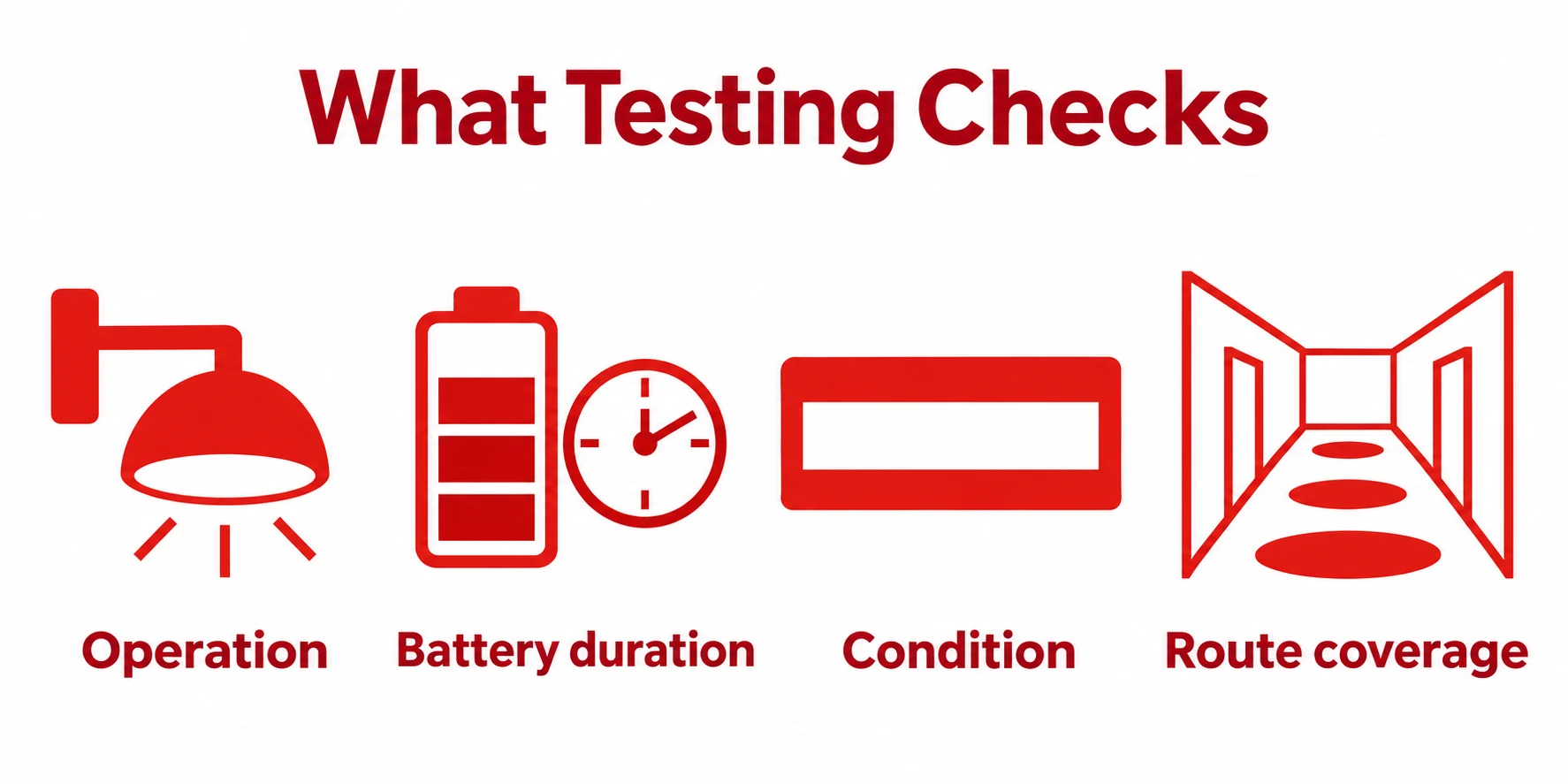
A professional test uses the appropriate test facility to simulate failure of the normal lighting supply and check that the emergency lighting responds correctly. The method depends on the system, which may use individual battery fittings, a central power supply or automatic testing equipment.
The engineer checks the relevant fittings and signs for operation and looks for visible defects. These can include damaged housings, obscured light sources, failed indicators or signs that are no longer clearly visible from the intended approach.
A thorough visit also considers whether the installation still matches the routes people actually use. Missing fittings, obvious gaps in coverage and changes to the layout should be flagged for further assessment where necessary.
Functional testing is not the same as a complete lighting design assessment. If there is doubt about illumination levels or spacing, a more detailed review, potentially including light measurements, may be needed.
Baudelaire’s electrical testing and commissioning services include emergency lighting testing, helping you understand how the installation performs and which defects require attention. Clear records make it easier to distinguish a failed component from a wider coverage concern.
Why short checks and duration tests both matter
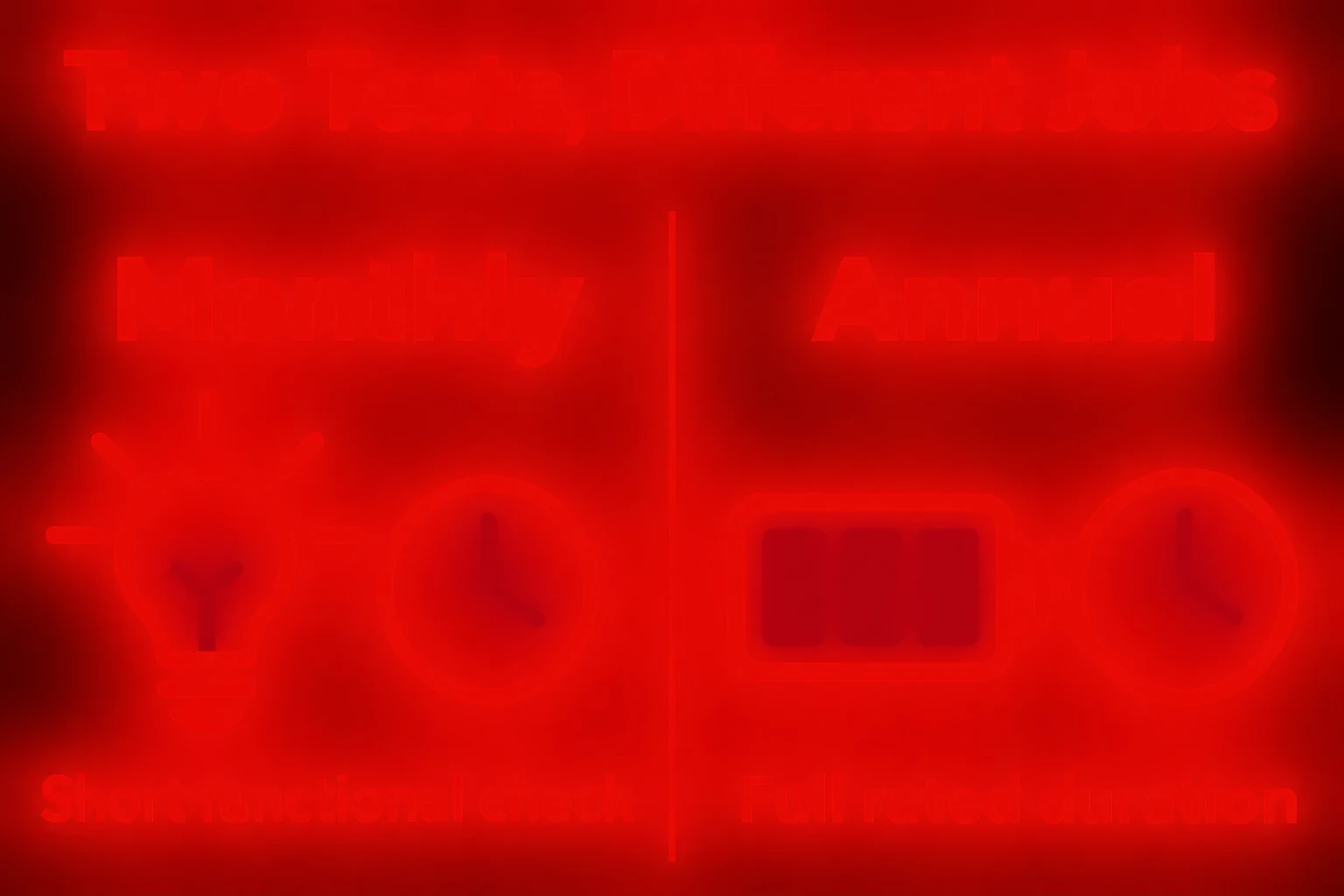
Routine arrangements generally include a monthly functional test and an annual test for the system’s full rated duration, following the applicable standard and system instructions. Some systems also require additional checks, so the maintenance schedule should reflect the equipment installed.
The monthly test briefly simulates loss of normal lighting. It checks that the emergency lamps operate, without deliberately exhausting the batteries. After the test, the normal supply must be restored and charging indicators checked where fitted.
The annual duration test checks whether the system continues to operate for its required period. Many installations have a three hour rated duration, but the correct requirement must be confirmed from the system design and relevant records.
A fitting can pass a short test yet fail a duration test because its battery no longer holds sufficient charge. That difference matters: a lamp that illuminates initially may not remain available throughout the period it is intended to cover.
Duration tests should be planned for a suitable time, allowing batteries to recharge before the premises again relies on their full capacity. Where people remain in the building, appropriate safety arrangements are needed during testing and recovery.
How faults and coverage gaps affect escape routes
Emergency lighting faults are not always apparent during everyday use. A charging indicator may be illuminated while the battery has insufficient capacity. A fitting used only during a supply failure may have a failed lamp that nobody notices between tests.
The significance of a defect depends partly on where it occurs. A failed fitting near a stair or a change of direction may affect a particularly important part of the route. Several neighbouring failures can leave a larger gap in illumination.
Coverage can also become unsuitable without an electrical failure. Consider whether any of these changes have taken place:
- Rooms have been divided or corridors altered.
- Exit routes or final exit doors have changed.
- Shelving or equipment now obstructs fittings or signs.
- The use or occupancy of an area has changed.
These changes should prompt a review rather than waiting for the next scheduled test. Replacing a failed battery will not resolve a gap caused by an altered layout.
Routine inspections between formal tests remain useful too. Report damaged fittings, obscured signs and fault indicators promptly, and keep escape routes clear. Working emergency lighting cannot make an obstructed route safe.
Turning test findings into practical action
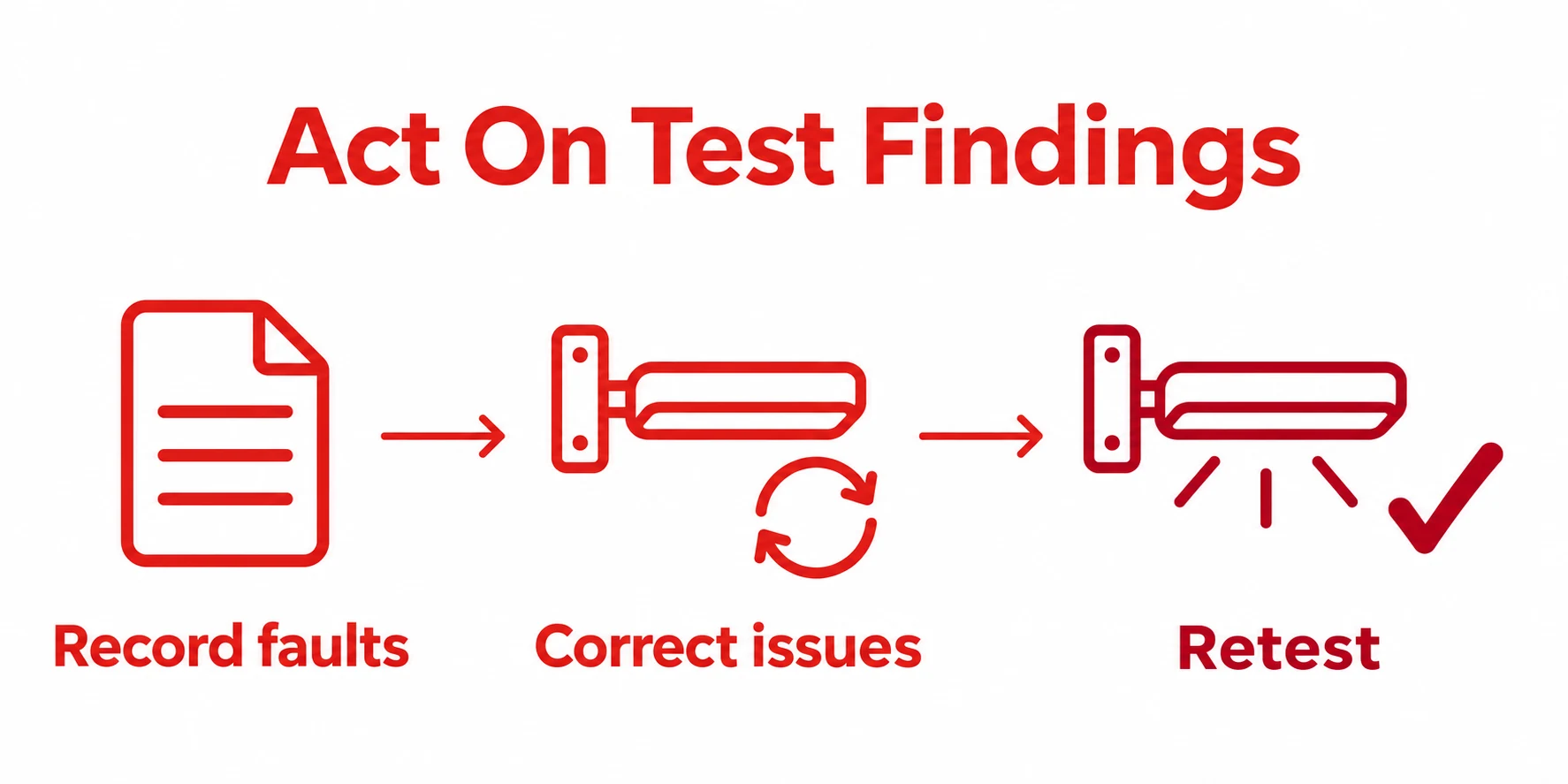
A useful test record identifies the test date, the equipment checked, the results and any defects found. Fittings should be identifiable so that a reported fault can be located reliably, repaired and checked again.
If a fitting fails, the next step is to establish the cause. Depending on the system, this could involve the battery, lamp, charging components, supply or controls. Repairs should be undertaken by someone competent, using suitable components and following the manufacturer’s instructions.
Any defect affecting escape route safety needs prompt assessment. The person responsible for the premises should obtain competent advice on the risk and any temporary precautions required until the fault is resolved. Simply recording a failure does not address it.
Keep test results, repair details and confirmation of successful retesting together. This creates a useful maintenance history and helps identify recurring problems. Our guidance on preparing your commercial property for an electrical safety audit can help you organise related records.
Before a testing visit, make existing logs and system information available, arrange access to relevant areas and mention recent layout changes. These details help the engineer assess the installation in the context of the building today.
- A fitting switching on does not prove adequate coverage or battery endurance.
- Monthly functional checks and annual duration tests serve different purposes.
- Layout changes can create coverage gaps even when fittings work.
- Record defects, arrange appropriate action and confirm successful retesting.
Frequently asked questions
Can our own staff carry out monthly emergency lighting tests?
A suitably instructed, competent person can often carry out routine monthly checks using the designated test facilities. They need to understand the procedure, restore normal operation, record results and report faults. Electrical investigation and repairs require appropriate competence.
Does a charging indicator mean the battery is healthy?
No. An indicator may show that charging power is present, but it does not prove that the battery can support the lamp for the required duration. That is why duration testing matters.
Do automatic testing systems remove the need for maintenance?
No. Automatic systems can perform and report specified tests, but someone still needs to review results and act on faults. Physical condition, sign visibility and changes affecting coverage also need attention.
Keep your emergency lighting ready
If your emergency lighting is due for testing, or your escape routes have changed, speak to Baudelaire. We can help you check performance, understand findings and plan the next steps to support safe evacuation.